November 2025 | Market Update
Northern Colorado
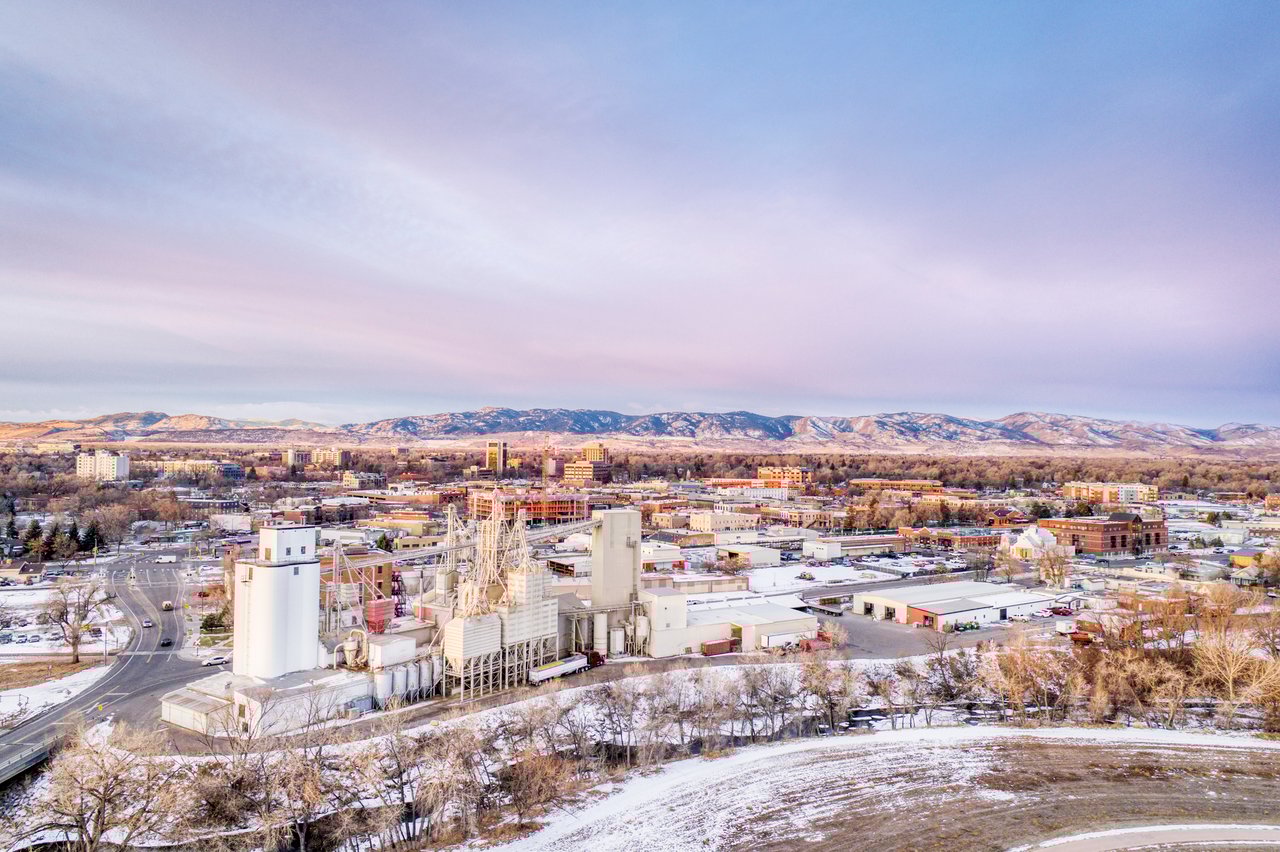
Northern Colorado
Northern Colorado enters the final month of 2025 with a property market that is neither booming nor contracting, but recalibrating. Amid seasonal slowdown, early snowfall, and shifting buyer psychology, the region shows signs of a market settling into a more sustainable equilibrium. Inventory is rising—though at a decelerating pace—prices remain stable, and the luxury market is undergoing a quiet structural reset that may advantage early-2026 sellers.
This is not the downturn some national narratives have forecasted. Instead, Northern Colorado is revealing a market that is normalizing after several years of volatility.
Contrary to headlines predicting falling home values, sales prices across the region remained largely unchanged year-over-year. Single-family home prices held steady in Larimer (0%), Weld (3%), Northern Colorado overall (1%), Denver Metro (1%), and the Foothills (1%) .
City-level performance reinforces this picture of stability:
Berthoud: Up 6% to $778,127
Loveland: Up 1% to $629,336
Fort Collins: Down a modest 2% to $713,689
Denver Metro: Up 1% to $787,989
In a year marked by rising inventory and heightened buyer selectivity, price stability signals underlying resilience.
Sold listings declined across most submarkets, reflecting a pause as buyers weigh timing, interest rates, and hopes for broader spring-2026 inventory.
Across Northern Colorado, sales fell 7% year-over-year, while Boulder Valley and Denver Metro posted 12% and 11% declines, respectively .
City-level results paint a similar picture:
Berthoud: –10%
Loveland: –15%
Longmont: –29%
Fort Collins: +5% (a notable outlier)
Estes Park: +5%
The decline signals caution—not distress. Buyers appear to be waiting for perceived opportunities in early 2026, especially in higher-priced segments.
Inventory growth, which accelerated through early and mid-2025, is now losing momentum.
Across Northern Colorado, Number of Homes for Sale:
Inventory rose 13% year-over-year
Boulder Valley rose 11%
Denver Metro rose 9%
Denver Foothills surged 26%
At the city level, Homes for Sale patterns vary:
Fort Collins: +11%
Loveland: +26%
Boulder: +18%
Longmont: +13%
Denver Metro: +9%
Crucially, months of inventory—the most telling indicator of future pricing—suggest a market still balanced but edging toward greater buyer leverage:
Denver Metro: 2.84 months (+9%)
Fort Collins: 2.5 months (+4%)
Estes Park: 5.5 months (+8%)
Evergreen: 3.3 months (+50%)
Estes Park, nearing six months of supply, is approaching conditions characteristic of a buyers’ market. But most submarkets remain fundamentally neutral.
The luxury segment (top 5% of the market) is experiencing a very different trajectory—one defined not by buyer retreat, but by seller withdrawal.
City-level luxury new listings:
Fort Collins: –44%
Longmont: –46%
Windsor: –71%
Berthoud: –67%
Denver Metro: –8%
This retreat has tightened competition significantly. Luxury sellers who remain on the market face less supply—and often better-qualified winter buyers.
Fort Collins: –8%
Timnath: –27%
Windsor: –15%
Longmont: –2%
Across the broader luxury regions, inventory is rising in some areas (e.g., Northern Colorado +7%) but falling sharply in others (e.g., Denver Foothills –10%) .
The patchwork underscores a market where micro-location and price segment matter more than ever.
Luxury months of inventory fell sharply in many cities:
Fort Collins: 3.5 months (–20%)
Timnath: 3.9 months (–25%)
Windsor: 3.9 months (–42%)
Longmont: 4.7 months (–8%)
These figures suggest an increasingly advantageous environment for high-end sellers, even as median-priced buyers grow more cautious.
Luxury price movements show a segmented market:
Berthoud: +12%
Timnath: +25%
Windsor: +75%
Denver Metro: +12%
Fort Collins: –10%
Longmont: –38%
Boulder: –29%
Meanwhile, regionally:
Northern Colorado Luxury: +11%
Denver Metro Luxury: +12%
Boulder Valley Luxury: –22% (reflecting a return to more rational pricing)
The high end is no longer monolithic; liquidity clusters around specific lifestyle and work-commute corridors.
Historical patterns suggest withdrawing listings over the holidays—but 2025 is different.
With inventory growth slowing and buyer demand steady, sellers who remain on market face less competition and rising visibility. Luxury sellers, particularly, are now positioned to benefit from sharply reduced supply.
Private Exclusives offer an additional advantage: the ability to build buyer interest quietly without days-on-market penalties—ideal for sellers aiming for a strategic 2026 launch.
Buyers currently face:
Stable prices
Rising but not excessive inventory
Lower seasonal competition
Those who wait until spring 2026 may encounter a faster-paced market, especially if mortgage rates ease or inventory tightens.
Northern Colorado’s real estate market is closing 2025 not in flux, but in formation. Price stability, moderating inventory growth, and tempered buyer sentiment point toward a more sustainable market cycle. Luxury dynamics, meanwhile, tell a story of scarcity-driven opportunity.
As the region prepares for 2026, the differentiators will be timing, strategy, and the hyper-local nuances of each micro-market.
MCM Collective at Compass enters this next phase armed with proprietary tools, data-driven strategies, and a holistic understanding of buyer and seller psychology—positioning clients for informed, advantageous decisions in a market that rewards preparation.
Stay up to date on the latest real estate trends.

Northern Colorado
Northern Colorado & Denver Metro Area Market Report

Northern Colorado
Northern Colorado & Denver Metro Area Market Report

Home By Design
REWORKING A 1915 HOME IN CLASSIC—YET WARM—STYLE
We enjoy being able to provide the level of expert detail and understanding to our clients that we would expect as a client if we were working through the same process. Whether it be going through the home buying process or listing your home, we look forward to working with you soon!
Ready to start a conversation?
Fort Collins 242 Linden St, Suite 216, Fort Collins, CO 80524 Boulder 1470 Walnut St, Suite 201/202, Boulder, CO 80302 Denver 200 Columbine St, Suite 400, Denver, CO 80206