In Estes Park, the House Isn't What You're Paying For
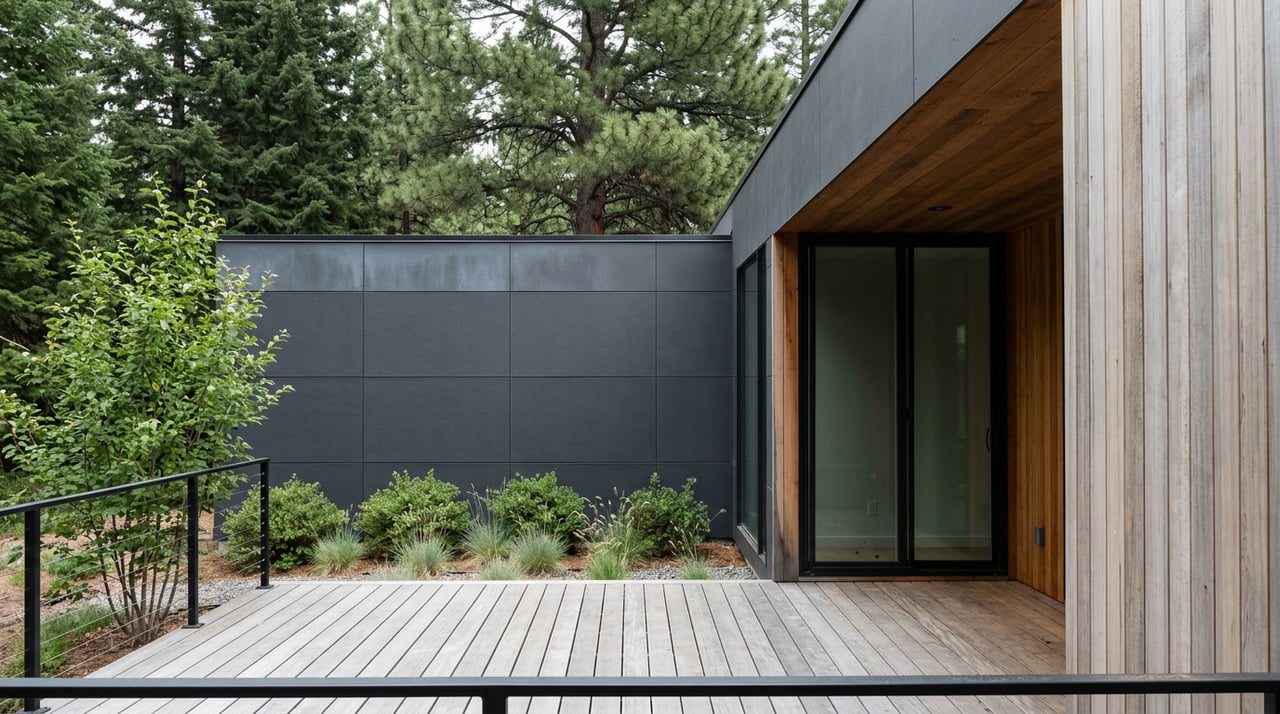
Two three-bedroom homes go on the market in Estes Park within a month of each other. Same size, same age, same distance from Rocky Mountain National Park's entrance, same finish level. One lists a track record of nightly rental income and asks fifty thousand dollars more. A buyer who has spent any time comparing Colorado mountain towns assumes that gap is the market pricing in a proven income stream. In Estes Park, that assumption is often wrong, and getting it wrong is expensive.
What actually separates those two houses is a small, capped, mostly non-transferable piece of paper called a Vacation Home License. The house is incidental. The license is the asset, and whether it survives the sale has nothing to do with the home's condition, size, or location. It depends on a cap that was set years ago, a waitlist that has opened and closed twice since, and a rule change the Town of Estes Park finalized in mid-December 2025 that most out-of-state buyers have never heard of.
The Town of Estes Park caps residential-zone vacation home licenses at 322. That number has not moved since 2020, when the town split a longstanding combined cap of 588 licenses between properties inside town limits and those in the unincorporated Estes Valley. Once that residential cap fills, a new owner cannot simply apply and get in line the way you might for a building permit. For years, the only way in was a waitlist, and that waitlist told its own story: when the Town Board placed a moratorium on new applications in October 2021, 60 households sat in the queue with a projected wait of five to seven years. By the time the Town Board revisited the policy in the spring of 2025, attrition had thinned that same list to just eight names.
That collapse is the tell. A five-to-seven year wait didn't get shorter because Estes Park suddenly had room. It got shorter because people gave up, moved, or decided the licensing costs weren't worth carrying. The cap itself never loosened.
On November 12, 2025, the Estes Park Board of Trustees approved Ordinance 18-25, and the rewrite took effect in mid-December. It replaced the old frozen waitlist with an annual lottery, capped at 30 open slots, that runs after each year's license renewal period closes. The first lottery under the new system accepted applications through March 20, 2026, with the drawing held March 30. Entry costs $50. If you're drawn and choose to move forward with an actual license application, a separate $200 non-refundable fee applies, credited toward the eventual license cost.
The ordinance also changed who must hold a license. Licenses are non-transferable by default, and now, even when a property sits inside an LLC or trust, the license itself has to be held in the name of a natural person with an ownership stake, not the entity. Advertising a property as a short-term rental without an active license is now penalized at up to $2,650 per day. And the town removed the old requirement that an owner be absent during a rental, which means a homeowner can now legally rent out part of a house while living in it, still counted against the same 322-license cap, still subject to the same two-occupants-per-bedroom-plus-two math that governs every vacation home in town.
None of this expands supply. It just changes the requirements for holding a license and makes it slightly more expensive to enter.
The first question any buyer needs answered before falling in love with a listing's rental history is which government actually regulates that parcel. Town of Estes Park and unincorporated Larimer County run separate systems with separate math.
| Town of Estes Park | Unincorporated Larimer County (Estes Valley) | |
|---|---|---|
| Residential-zone cap | 322 licenses | 208 registrations |
| Waitlist mechanism | Annual lottery, 30 slots, reopened under Ordinance 18-25 | Standing waitlist, spots non-transferable |
| Base annual fee | $200 base + $50 per bedroom | Varies by license type |
| Renewal cycle | Annual, due January 31 | Biennial, $250 fee starting January 1, 2026 |
| Workforce housing linkage fee | $1,500 in 2026, adjusted annually for inflation | Not applicable |
| Default transferability | No, with narrow continuous-operation exceptions | No, with limited exceptions |
Larimer County's own guidance describes the county cap as 208 registrations today, a tighter number than the 266 county licenses set aside when the 2020 split first happened. Whether that reflects genuine attrition or a redefinition of what counts, the practical lesson is the same: these numbers are not fixed facts you can look up once and trust forever. They move, and the town's number and the county's number have never moved together.
If licenses mostly don't transfer, what explains a home selling with a rental history intact? A narrow exception. The Town of Estes Park and the Larimer County Land Use Code allow a license to follow the property when it has operated continuously, without a lapse, since before their respective cutoff dates, roughly mid-October 2021 for the town's original cap. A license that has been active and unbroken since before the applicable cutoff date is the closest thing this market has to a portable asset.
That is the real driver behind two identical-looking homes carrying different price tags. It is not the rental income itself, which any owner could lose to a slow season or a bad year. It's whether the specific license attached to that specific address survived every renewal deadline since 2021 without a gap. A buyer who assumes an active listing equals a transferable listing is pricing in an asset that may vanish at the closing table.
There's one more layer to consider. The Estes Valley Short-Term Rental Alliance explains that homeowners' association covenants can prohibit short-term rentals even when the town or county permits them. A valid Vacation Home License does not protect an owner from HOA enforcement action. Checking CC&Rs is not optional due diligence here, it's the last gate a license has to clear before it means anything.
Estes Park closed 2025 with 413 sales, up 6.2 percent from 389 the year before, and a median price of $634,000, essentially flat against 2024's $640,000. That reads like a market catching its breath. But look at the components underneath it. Over the three months ending in May 2026, the median sale price per square foot climbed to $415, up 13.7 percent year over year, even as overall days on market roughly doubled, from 65 days a year earlier to 108. A market where price per square foot is accelerating while time on market is stretching is not one number, it's two markets layered on top of each other. A visible slice of inventory, homes that can credibly carry rental income forward because their license survived the reset, is commanding a real premium. The rest of the market, homes selling as houses rather than as licensed income properties, is sitting longer and pricing closer to flat.
That split doesn't show up in a median. It shows up when you ask the one question most out-of-state buyers never think to ask before writing an offer.
Can I apply for a Vacation Home License before I close on a property? No. The Town of Estes Park requires proof of ownership for a license application.
Does living in the home while renting part of it get around the cap? No. Ordinance 18-25 now allows hosted rentals where the owner stays on site, but hosted units still count against the same 322-license residential cap and the same occupancy formula as any other vacation home.
If I win a lottery slot, am I guaranteed a license? No. Winning the lottery earns a position on the waitlist, not an automatic license. You still need to complete the full application, including a compliance inspection and a life-safety review, and pay the associated fees.
Rental income potential can be a legitimate part of an Estes Park purchase, but only when it's verified at the license level, not assumed from a listing sheet. If you're comparing homes here and want someone to walk the actual paperwork with you before you write an offer, MCM Collective can help you separate what a house is worth from what its license is worth. Request a Home Valuation to start with the real numbers.
This article is general information, not legal, tax or financial advice. Consult a qualified professional about your situation.
Stay up to date on the latest real estate trends.


Market Report
Rates Cross 7%, Inventory Builds, and the Front Range Splits Into Many Markets




Market Update
Inventory climbs and buyers gain leverage, while Weld County's luxury market and Loveland's closings break from the trend.
We enjoy being able to provide the level of expert detail and understanding to our clients that we would expect as a client if we were working through the same process. Whether it be going through the home buying process or listing your home, we look forward to working with you soon!
Ready to start a conversation?
Fort Collins 242 Linden St, Suite 216, Fort Collins, CO 80524 Boulder 1470 Walnut St, Suite 201/202, Boulder, CO 80302 Denver 200 Columbine St, Suite 400, Denver, CO 80206