The Berthoud Lot Listing Doesn't Mention This $130,000 Decision
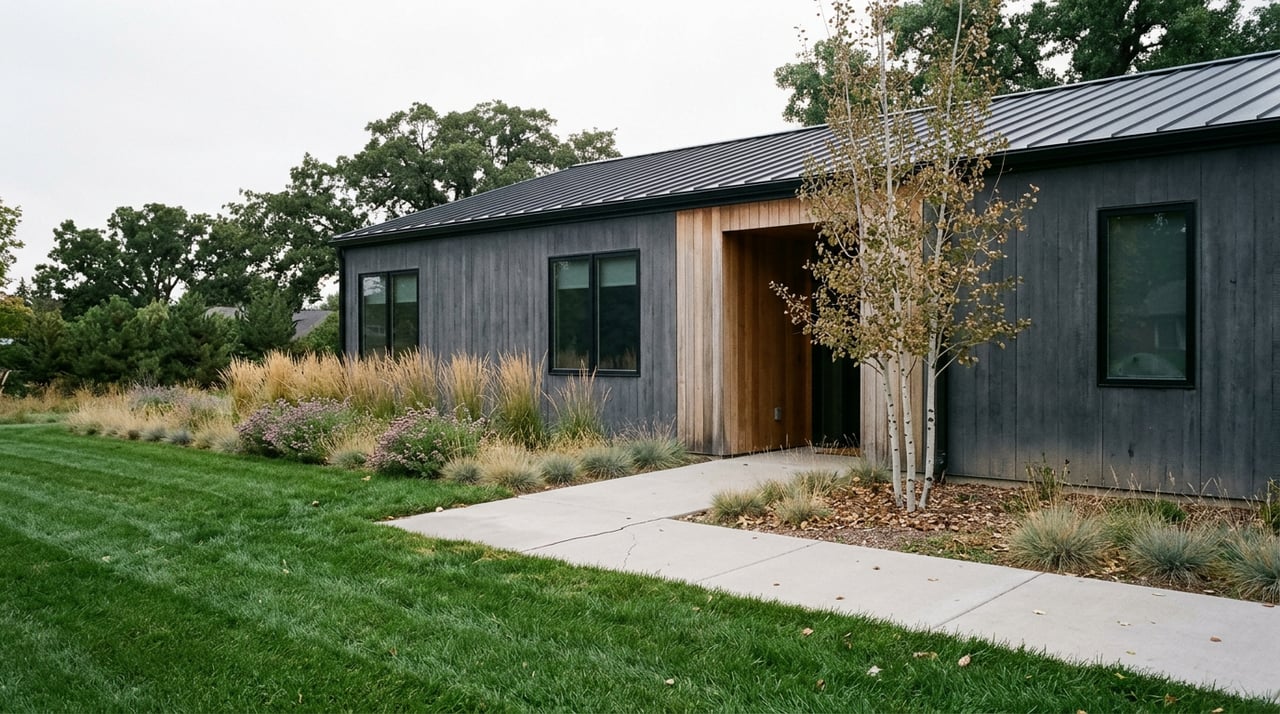
In Berthoud, the water tap fee on a new home is not set by the size of your house. It is set by how much of your yard you plan to water. Two buyers can close on identical floor plans, on identical lots, in the same subdivision, and pay six figures apart in tap fees before either one pours a foundation. Nobody puts that number on the listing sheet, and by the time most buyers hear about it, the site plan is already drawn and the decision that would have saved them the most money is already made.
This matters right now because Little Thompson Water District, which serves Berthoud and the rural land south of town, published a new tap fee schedule effective April 17, 2026. The gap between its cheapest and most expensive residential tap is more than $130,000. That gap is not a mistake or a penalty. It is the district's way of charging you for the water you tell it you intend to use, and it is worth understanding before you write an offer on a Berthoud lot, not after.
Little Thompson Water District, or LTWD, prices a single-family tap in three tiers. The cheapest is an indoor-use-only tap at $54,650, meant for a home with no conventional outdoor irrigation. It typically requires a xeriscaped lot or a separate non-potable system for anything you water outside. The standard residential tap, built around a typical suburban lot with a conventional lawn, runs $123,400. At the top sits the three-quarter-inch estate tap at $187,500, priced for acreage-style lots with extensive irrigated landscaping.
| Tap Tier | Fee (effective April 2026) | What It Assumes About Your Lot |
|---|---|---|
| Indoor-use-only | $54,650 | No conventional outdoor irrigation |
| Standard residential | $123,400 | A typical suburban lawn |
| 3/4-inch estate tap | $187,500 | Acreage with extensive irrigated landscaping |
None of these figures move because your house is 2,400 square feet instead of 3,200. They move because of how many square feet of grass, garden, and landscaping you intend to keep green. A four-bedroom home on a xeriscaped quarter acre and a four-bedroom home on an irrigated half acre, built by the same crew, on the same street, can land in two different tiers entirely.
If your last home was inside Denver's city limits, the number you remember for a water tap is much smaller. Denver Water raised its single-family tap fee this year, and as of July 1, 2026, a typical home on a 7,000-square-foot lot pays $10,450, up from $7,930 in 2025. Suburban Denver Water customers pay $14,680. Those are the kind of numbers most Front Range buyers mentally file under "closing costs," somewhere in the same category as title insurance.
Berthoud isn't served by a municipal utility like Denver Water. It sits inside a special district's territory, and special districts price water differently, because they are financing their own pipes, storage, and water rights with no city budget behind them. Castle Rock's water utility, for comparison, charges $45,760 for a single-family tap, though it discounts smaller homes by as much as 39 percent to keep starter-home construction affordable. Little Thompson's model runs the other direction. It doesn't discount for a smaller house. It prices for the water you plan to use outdoors, and that can land well above what a Denver or Castle Rock buyer would expect to pay for the exact same square footage.
This is also why the address on a listing tells you less than you think. District boundaries in Northern Colorado follow water rights history, not city limits, so two lots a few blocks apart can sit inside different districts with entirely different fee schedules. A parcel with a Berthoud mailing address is not automatically an LTWD customer, and the only reliable way to know which district serves a specific lot is to call with the parcel number, not the street address.
Colorado passed a new law in 2025 aimed squarely at fees like these. House Bill 25-1211, signed by Governor Polis in May 2025 and in effect since August 2025, requires special districts to show that a tap fee is reasonably related to the actual cost of providing water service, and it directs districts to consider factors like long-term expected water use, water-efficient fixtures, and greywater systems when they calculate a reduced or proportional fee. The law grew out of complaints that some districts were using tap fees to discourage density or affordable housing rather than to recover real infrastructure costs, and it passed with support from housing advocates and opposition from several water districts that argued their fees were already tied to legitimate costs.
Here's the part that matters for a Berthoud buyer specifically. Water law attorneys who tracked the bill closely have noted that it is unlikely to force major changes in how most special districts calculate fees, because it largely codifies practices many districts already followed. Little Thompson's model, tiered to expected water use rather than a flat rate by meter size, is arguably closer to what the new law encourages than the flat-fee approach the legislature was trying to move districts away from. In other words, the law pushes the industry toward exactly the kind of usage-based pricing LTWD was already doing. That means the tiered structure driving Berthoud's tap fee spread is not a temporary quirk waiting to be regulated away. It is the direction Colorado water pricing is headed, and Berthoud got there early.
If you're comparing a Berthoud lot to something in Windsor, Timnath, or unincorporated Larimer County, the tap fee line item deserves the same scrutiny you'd give a metro district tax or an HOA transfer fee. A few habits make the difference between a budget surprise and a budget you controlled from the start.
Find out which district actually serves the parcel, using the parcel number rather than the address, since district lines don't track city boundaries. Ask the district for its current written fee schedule rather than relying on a number a builder or a previous owner mentioned, since these schedules are revised at least annually. Decide how much of the lot you actually intend to irrigate before the site plan is finalized, since that decision is one of the only six-figure line items on a new build you can still change for free while it's just a sketch. And if a conservation-style tap is available, ask what it requires. Fort Collins-Loveland Water District, just north of Berthoud, offers a conservation tap around $55,685, roughly $35,000 below its typical lot tier, in exchange for a non-potable irrigation system or a recorded deed restriction against outdoor potable use.
None of this changes what a home is worth once it's built and the tap is paid for. It changes what the same lot costs two different buyers with two different landscaping plans, and that is exactly the kind of number a listing sheet will never show you.
Does this affect a resale home already built in Berthoud? No. An existing home's tap fee and water allocation were set when it was originally connected. This matters for vacant lots, new construction, and teardown-rebuild projects where the tap has not yet been purchased.
Is Berthoud's fee structure unusual for the area? Tying a tap fee to expected water use is common among Front Range special districts, but the size of the gap between tiers and the specific dollar figures vary widely district to district, which is why the parcel-level check matters more than a general assumption about "what Northern Colorado charges."
Where do I confirm which district serves a specific lot? Contact the district directly with the parcel number, not the mailing address. District staff can tell you which fee schedule applies and what documentation a conservation-tier tap would require.
Water tap fees are one of several line items that don't show up until you're deep into a Berthoud purchase, and they're the kind of detail that separates a lot budget that holds from one that gets renegotiated in escrow. If you're weighing a Berthoud lot against other Front Range options, or wondering what a specific parcel's water costs would actually look like, MCM Collective can walk through the numbers with you before you write an offer. Request a Home Valuation to start that conversation.
Stay up to date on the latest real estate trends.


Market Update
Inventory climbs and buyers gain leverage, while Weld County's luxury market and Loveland's closings break from the trend.
We enjoy being able to provide the level of expert detail and understanding to our clients that we would expect as a client if we were working through the same process. Whether it be going through the home buying process or listing your home, we look forward to working with you soon!
Ready to start a conversation?
Fort Collins 242 Linden St, Suite 216, Fort Collins, CO 80524 Boulder 1470 Walnut St, Suite 201/202, Boulder, CO 80302 Denver 200 Columbine St, Suite 400, Denver, CO 80206