Why a Fort Collins Home Can Fail Its Radon Test in Winter and Pass in Summer
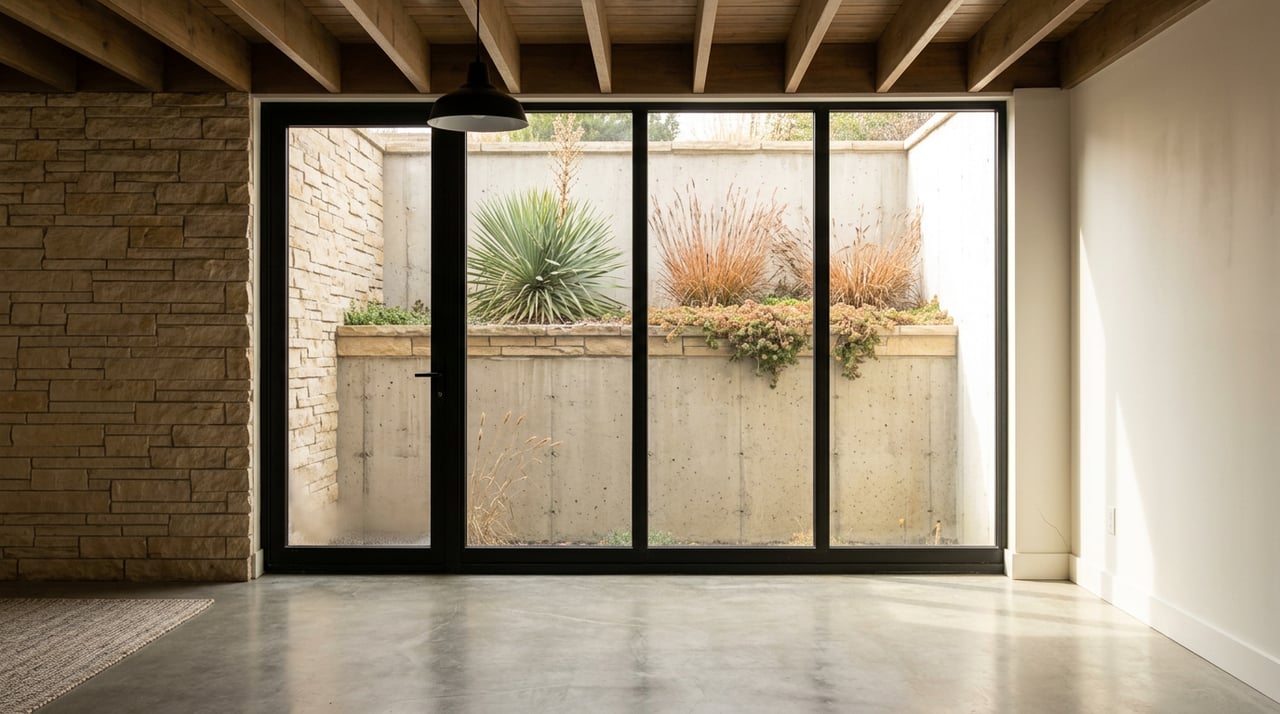
Two houses on the same Fort Collins block, same age, same foundation, same soil underneath them, can return two different radon numbers depending on nothing more than what month the test happened. Not renovation. Not maintenance. The calendar. That single fact is reshaping how radon actually gets negotiated in Fort Collins real estate, and it is the part of the process most sellers and buyers never hear until they're already staring at a report.
Radon used to be a line on a disclosure form that most people skimmed past. In Fort Collins, that has changed. The number now shows up early, gets argued about in escrow, and in a meaningful share of deals, determines who pays for what before closing.
Colorado's SB23-206, in effect since August 2023, changed what a seller's disclosure form has to say about radon. Every residential sales contract now has to carry specific, bold-faced language recommending buyers get an indoor radon test before purchasing, and recommending mitigation if levels come back elevated. Beyond that boilerplate, the seller's property disclosure has to state whether the home has ever been tested, share the most recent results, describe any mitigation performed, and note whether an active mitigation system is installed. It is not a suggestion. It is baked into the contract paperwork used across Colorado's real estate transactions.
That legal backdrop is why radon contingencies have become close to standard in Fort Collins purchase agreements rather than an occasional add-on. Buyers are not adding the clause because their agent is being cautious. They're adding it because the paperwork already points them toward it.
Here is the part that surprises people who assume radon is a rare problem confined to a few unlucky addresses: about half of all homes tested in Fort Collins come back above the EPA's action level of 4.0 picocuries per liter, according to the City of Fort Collins's own radon program. This isn't a fluke tied to one neighborhood or one style of house. It's geology. The Front Range sits on ground that produces radon at rates well above the national picture, and Larimer County's monitoring data puts the local average at 7.8 pCi/L, nearly six times the national average of 1.3 pCi/L.
Full basements are the regional norm here, more so than in a lot of the country, and basements sit in the most direct contact with the soil radon is coming from. That combination, common construction style plus radon-rich ground, is why the number shows up so often on inspection reports regardless of a home's age, price point, or how well it's been maintained. An elevated reading is closer to a regional baseline than a red flag about the specific house.
This is the mechanism that actually changes how the number should be read. Cold weather intensifies what's called the stack effect: heated air rising through a house creates negative pressure low in the building, and that pressure pulls soil gas, radon included, up through foundation cracks and slab joints faster than it would in warmer months. The practical result in Fort Collins is that winter radon readings commonly run 30 to 50 percent higher than summer readings taken in the same house.
That range matters for two very different people. For a seller, it means a home tested during a January closed-house window can show meaningfully higher numbers than the same home tested in July, even with nothing about the structure having changed. For a buyer comparing two homes, one tested in winter and one in summer, the numbers on paper are not actually comparable unless you know when each test was taken. A "worse" reading on one house might just be a colder month.
This is also why professional testing protocols call for closed-house conditions, windows shut, HVAC running normally, for at least twelve hours before and during the test. It standardizes the one variable that otherwise makes two identical houses look different on paper.
An elevated reading is not a dealbreaker in Fort Collins. It has become routine enough that there are three well-worn paths deals take once the number lands, and knowing them ahead of time changes how a seller prices the risk and how a buyer negotiates it.
| Path | What it looks like | Typical timeline |
|---|---|---|
| Seller mitigates before closing | Seller hires a certified contractor to install a sub-slab depressurization system before the sale finalizes | Roughly one to two weeks for installation, often fitting inside a standard closing window |
| Buyer takes a credit | Seller and buyer agree on a closing credit sized to cover mitigation, and the buyer handles installation after taking possession | No delay to closing itself |
| Sale proceeds as-is | Seller discloses the known result and any history, and the buyer accepts the property with the number on record | No mitigation delay, but full disclosure is required regardless of which path is chosen |
Cost is the number both sides actually care about, and it's more modest than people expect. A standard sub-slab or sub-membrane depressurization system, the type installed in most Fort Collins homes with elevated readings, typically runs in the neighborhood of $1,000 to $2,000. Properly installed, these systems reduce radon levels dramatically and are considered a permanent fix rather than something that needs revisiting each year, beyond an occasional retest.
For sellers, the practical takeaway is that an elevated reading rarely kills a deal on its own, but it does become a line item buyers expect addressed one way or another. Pricing that reality into a listing, rather than discovering it mid-escrow, keeps a transaction moving instead of stalling it in negotiation.
If you're weighing whether to test before you list rather than waiting for a buyer's inspector to surface the number first, Fort Collins makes that easy. The city sells discounted radon test kits at the Fort Collins Senior Center at 1200 Raintree Drive, six dollars for a short-term kit, twenty dollars for a long-term one. It's not a substitute for the certified continuous radon monitor test a buyer's inspector will typically use, since lenders and title companies generally want results from a professional using calibrated equipment. But as a first read, before you spend money on staging or repairs, it tells you which of the three paths above you're likely to be navigating, and it lets you get ahead of the conversation instead of reacting to it.
Does Colorado require sellers to install a mitigation system before selling? No. Colorado law requires disclosure of known test results and mitigation history, not mitigation itself. Whether a system gets installed before closing is a matter of negotiation between buyer and seller, not a legal mandate.
Can I use a DIY test kit purchased at the Senior Center for the actual sale paperwork? You can use it to get a sense of your home's levels before listing, but most buyers, lenders, and title companies expect the contract-stage test to come from a certified radon professional using a continuous monitor, since that testing method is harder to dispute later.
If my home already has a mitigation system, does that end the conversation? Not quite. Disclosure rules require sellers to state that a system exists and to share its history, since the assumption is that radon levels would return to their pre-mitigation baseline if the system ever failed. Buyers will often still want to confirm the system is functioning.
Does an elevated radon reading affect what a home is worth? Not directly. It affects how a deal gets structured near closing, credit, pre-closing mitigation, or as-is disclosure, more than it affects the underlying value of a well-maintained home in a market where roughly half of comparable houses share the same condition.
Radon in Fort Collins isn't a defect story. It's a paperwork and timing story, and the sellers and buyers who understand both end up with smoother closings than the ones who treat the number as a surprise. If you're weighing when to list, how to price around an inspection contingency, or what a mitigation credit should actually look like in your offer, MCM Collective can walk through the specifics with you before it becomes a last-minute negotiation. Request a Home Valuation to start that conversation.
Stay up to date on the latest real estate trends.

Market Report
Rates Cross 7%, Inventory Builds, and the Front Range Splits Into Many Markets


Market Update
Inventory climbs and buyers gain leverage, while Weld County's luxury market and Loveland's closings break from the trend.
We enjoy being able to provide the level of expert detail and understanding to our clients that we would expect as a client if we were working through the same process. Whether it be going through the home buying process or listing your home, we look forward to working with you soon!
Ready to start a conversation?
Fort Collins 242 Linden St, Suite 216, Fort Collins, CO 80524 Boulder 1470 Walnut St, Suite 201/202, Boulder, CO 80302 Denver 200 Columbine St, Suite 400, Denver, CO 80206