Buying or Selling a Boulder Home With an ADU? Here's the Paperwork That Actually Sets the Price
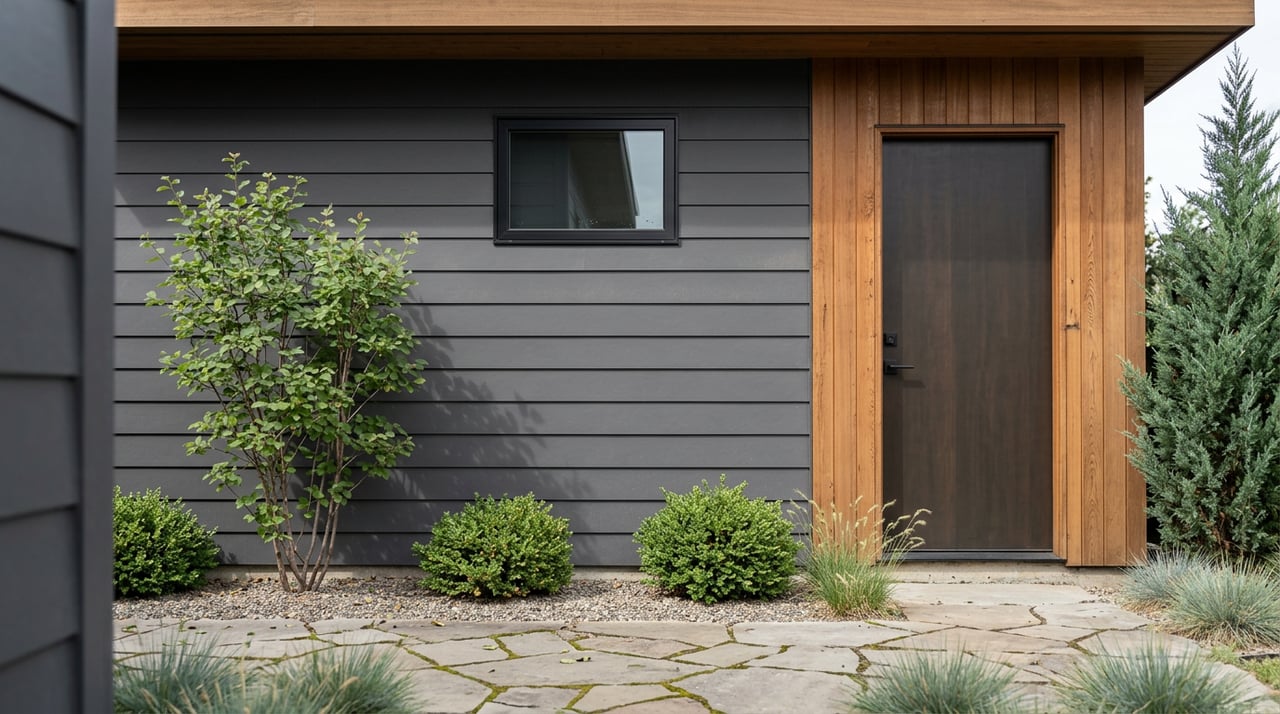
Walk two blocks in North Boulder and you will likely pass a backyard studio with its own entrance, its own address number, and a tenant who pays rent every month. Two doors down there may be another one that looks identical from the sidewalk. Same entrance, same address number, same tenant paying rent. One of these units will clear an appraisal without a fight, insure without a second call, and add real dollars to a sale price. The other is a liability with a nice roofline, and the person who finds that out is usually the buyer, a few weeks after closing.
The difference almost never shows up in the listing description. It shows up in a permit file the city keeps, one that most buyers never think to pull. That gap, not whether a property simply has an ADU, is what is actually moving price, financing, and rentability across Boulder right now.
An analysis of 447 Boulder single-family sales in zip codes 80302 and 80304, sold within roughly two years through May 2026 and matched against the City of Boulder's accessory dwelling unit program and Boulder County Assessor records, found only 24 homes with any sign of an ADU at all. The city's permitted registry confirmed 15 of them. The other 9 were advertised, in the listing itself, as having a guest suite, a carriage house, or an accessory unit that the city's own records never mention.
That is not a rounding error. It means roughly a third of the ADUs a buyer might see on a listing sheet cannot be confirmed against the record that actually determines what the unit is worth.
Here is why the paperwork matters more than the square footage:
None of that requires the unit to be poorly built. It only requires the paperwork to be missing.
Boulder spent roughly a year and a half making it dramatically easier to rent out an ADU legally, and that is exactly what widened the gap between what gets advertised and what gets filed.
Governor Polis signed HB24-1007 on April 15, 2024, banning occupancy limits based on unrelated persons statewide. Boulder folded that into city code through Ordinance 8651, adopted March 6, 2025. Two days later, on March 8, 2025, Ordinance 8650 took effect and eliminated the ADU owner-occupancy requirement, the parking minimum, and the old 5,000-square-foot minimum lot size. A companion state law, HB24-1152, reached full effect statewide on June 30, 2025, requiring Front Range cities to allow at least one ADU per single-family lot. Boulder had already gone further than the minimum by the time that deadline arrived.
Each of those changes raised the payoff for turning an existing structure, a garage apartment, a finished basement with a kitchenette, into a source of monthly income. None of them created a matching push to legalize the units that were already out there. The city's own program page acknowledges that previously unpermitted ADUs are common in Boulder and that legalization is possible under current code, but existing units still have to be brought up to today's standards. Old work does not get grandfathered simply because it has been there a while.
That is the mechanism behind the registry mismatch. Deregulation made renting easier. It did nothing to make disclosure automatic.
The value signal in the sales data is real, though the exact size of it depends on which homes you count. One read of the sample put ADU homes at a median near $2.30 million versus $1.75 million without one, a gap of roughly $550,000. A more conservative cut of the same registry-matched properties landed closer to $1.95 million versus $1.75 million. The multiplier moves. The direction does not: a confirmed, permitted ADU adds value, and it adds more than an advertised one that cannot be confirmed.
Detached units, the standalone studio or carriage house rather than a basement conversion, sat at the top of the range in both cuts, with a median near $2.47 million, about $700,000 above a comparable home with no ADU. Attached units behaved differently. They priced close to the same per-square-foot rate as the rest of the house, which makes sense, since they are ordinary counted living space. Detached units priced higher per square foot, partly because a freestanding building is often not folded into a home's listed square footage at all. Buyers are paying for space the listing number never shows them.
There is also a reason detached units are more likely to end up unpermitted in the first place. A detached ADU in Boulder requires its own automatic fire sprinkler system on a dedicated bypass meter, a line item that typically runs $8,000 to $15,000 and is one of the most commonly missed costs in early ADU quotes. It is also one of the easier corners to cut if a homeowner is building without a permit to begin with. The units with the highest upside are the same ones most likely to skip the step that would make that upside legally collectible.
If the plan involves nightly or weekly rental income, one date matters more than any of the ordinances above. In Boulder, you can only run an ADU or the main house as a short-term rental, the kind of stay a booking platform handles, if both the unit and its short-term rental license were established before February 1, 2019. Build a new ADU today under every current, more permissive rule, and short-term renting it is closed off permanently. Even a unit that qualifies under the grandfather clause is capped at 120 days a year, in stays of 29 days or fewer, on a property where the owner lives more than half the year. For nearly every new ADU in Boulder, the only rental path is a lease of 30 days or longer.
None of this is legal or financial advice, and every one of these steps is worth confirming with your own lender, insurer, or attorney before you sign anything.
Citywide sold-price data put Boulder's median sale price at $854,000 over the three months ending in May 2026, down 14.5 percent year over year. A separate dataset covering the same general window put it closer to $915,000, down 16.8 percent year over year. The exact figure moves depending on the source, but the direction holds: prices have cooled from recent highs. In a market like that, a buyer cannot count on broad appreciation to absorb a mistake. If the rental income or the extra square footage an ADU appears to offer turns out to be unenforceable, there is less cushion underneath the purchase than there would have been two or three years ago. Getting the paperwork right before closing matters more now, not less.
Does having an ADU always add value to a Boulder home? Not automatically. The data shows a consistent premium for permitted, registry-confirmed units. Units that are only advertised, with no matching city record, carry more risk than confirmed upside.
Can an existing unpermitted ADU be legalized after purchase? Often, yes. Boulder allows legalization of previously unpermitted units, but the whole structure has to meet current building code, not the code in effect when it was originally built.
If I buy a home without an ADU, can I add one after closing? In most cases, yes, given the state mandate that took full effect June 30, 2025 requiring at least one ADU per single-family lot across Front Range cities. Setbacks, size limits, and the permit process still apply just as they would for any other ADU project.
If you are weighing a purchase that hinges on an ADU's income, or you are getting ready to list a home with one, the paperwork question is worth answering before the offer stage, not after. MCM Collective works these details into every Boulder engagement, from verifying permit history to pricing a property honestly around what its accessory unit can actually deliver. Request a Home Valuation and we'll walk the file with you before you walk the property.
Stay up to date on the latest real estate trends.


Market Update
Inventory climbs and buyers gain leverage, while Weld County's luxury market and Loveland's closings break from the trend.
We enjoy being able to provide the level of expert detail and understanding to our clients that we would expect as a client if we were working through the same process. Whether it be going through the home buying process or listing your home, we look forward to working with you soon!
Ready to start a conversation?
Fort Collins 242 Linden St, Suite 216, Fort Collins, CO 80524 Boulder 1470 Walnut St, Suite 201/202, Boulder, CO 80302 Denver 200 Columbine St, Suite 400, Denver, CO 80206