Real Estate In Perspective | February 2026
Northern Colorado
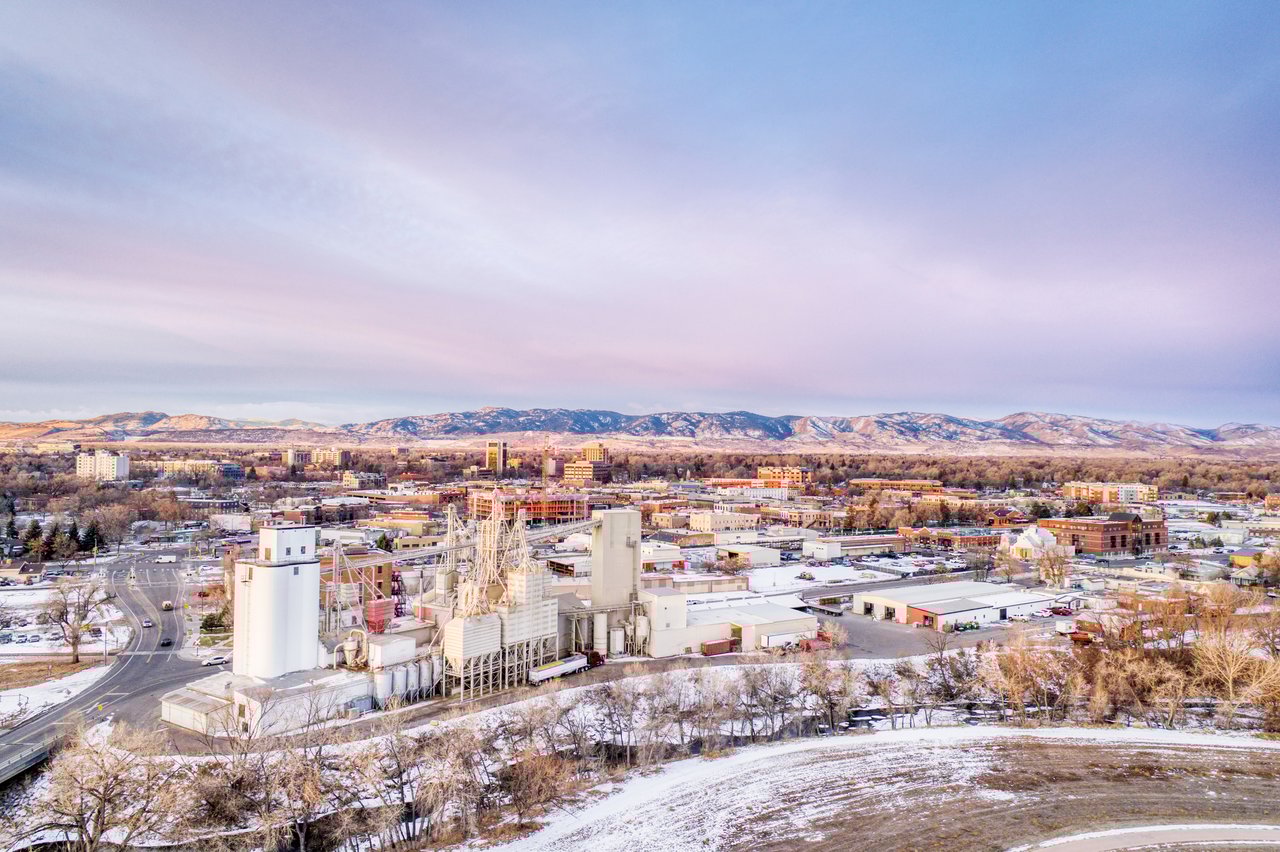
Northern Colorado
Entering into the last month of the 1st Quarter of 2026, the real estate market across Northern Colorado and Denver Metro Area are revealing. In most years in this season, inventory levels would be low but be rising. This year, a different story is emerging. Let's dive in.
Inventory of New Listings Falling: Nationally, new listings are down 6% year over year. Locally, we're seeing the same trend. Fort Collins is down 7%, Berthoud down 4% and Timnath down a whopping 15%. Loveland is an outlier up 23% versus this time last year, Denver Metro up 3%. Overall, the trend is sellers are holding back either because they can't find the home that meets their next need or because they don't want to be the first out of the gate and risk sustained days on market.
Number of Sold Homes is Up: Buyers are active and it's showing in the data this month. Longmont's sales in February: up 14% year over year. Loveland is up 7% and Fort Collins up 1%. Estes Park, a second home market, is down 43% versus this time last year. Nationally, under contract homes is up 6%, and Colorado is up 11%. Buyer demand is likely driven by two factors: interest rates dipping below 6% for a 30 year fixed mortgage and a delay from many first time buyers over the past several years causing pent up demand that is breaking.
Average Sales Prices are Up: We look at average sales prices in a 12 month rolling average to give a clearer picture. With that, average single family sales prices are up 4% to $719,980 in Windsor, up 3% in Berthoud to $782,722 and up 1% in Fort Collins to $720,474, an additional indication that the market is picking up.
Months of Supply is Shrinking: Measured in the length of time in months before we'd sell through all inventory at the current sales rate, this indicator shows us which markets are leaning toward buyers favor, or sellers — a lower number favors sellers. Fort Collins is down 14% year over year to 1.8 months of inventory. Longmont down 4% to 2.4 months. Denver Metro had a slight rise to 2.5 months, up 4%.
Luxury Sales Prices Up: Looking at the top 5% of the market, the biggest story across the region: Luxury Sales Prices are up year over year on a 12 month rolling average. Fort Collins is up 22% to an average luxury sales price of $1,718,171; Berthoud up 36% to $1,990,456. Also notable, sales volumes in the luxury sector are up: Longmont closed $16,265,000 in luxury sales, Fort Collins was up 68% to $18,899,877. High sales in February included a $8.995M house in Denver Metro, a $3.35M estate in Longmont and a $3.025M Old Town Fort Collins home — a record sale represented by Kelly McBartlett at MCM Collective.
Our Current Market Assessment: We're continuing to watch this dynamic market that is shifting on a weekly basis. In short, buyers are more active now than they have been in the past several years driven by lower interest rates and delayed purchasing. And so far this year, sellers have been reluctant to put their homes on the market, creating scarcer inventory in most markets. Our advice to buyers: the trend doesn't look to be improving, so if there is a home you like in the market now, make a move before you're faced with the increasing threat of multiple offers on properties. For sellers, if you have been considering a move this year, moving your timeline up a bit could reap rewards — preparing your home now, taking a strategic measured approach to entering the market and assessing the market data regularly is critical. Feel free to reach out, we're here to evaluate your situation and create a winning strategy.
To read Northern Colorado's February data with precision, it helps first to understand what the national market is signaling — and where our region diverges from or confirms the broader picture.
The single most consequential development of the month came on February 26th, when Freddie Mac reported that the 30-year fixed-rate mortgage averaged 5.98% — the first time in three and a half years it dropped into the 5% range. Freddie Mac's Chief Economist Sam Khater noted that this rate, combined with the improving availability of homes for sale, is meaningful and will drive more potential buyers into the market for the spring homebuying season. That assessment is already bearing out in our local data.
The rate milestone arrives against a backdrop of moderated but persistent national sales pressure. Existing-home sales decreased 8.4% in January 2026, with month-over-month and year-over-year sales declining across all regions. NAR Chief Economist Dr. Lawrence Yun attributed some of that weakness to weather, noting the difficulty of reading January's numbers given below-normal temperatures and above-normal precipitation — but confirmed that affordability conditions are improving, with NAR's Housing Affordability Index showing housing is the most affordable it's been since March 2022, driven by wage gains outpacing home price growth and mortgage rates lower than a year ago.
The inventory picture nationally is one of gradual normalization — but unevenly distributed. National active inventory is up 10% year-over-year as of January 31, 2026. Critically, however, Colorado is among nine states where active inventory has surpassed pre-pandemic 2019 levels — a dynamic that has historically correlated with softer price growth. Northern Colorado's resilience against that statewide headwind is therefore notable and worth examining closely at the submarket level.
Mike Simonsen, Chief Economist at Compass and founder of Altos Research, frames the broader shift in terms that resonate directly with what we are seeing locally. Simonsen describes 2026 as "the next era for the housing market" — one where frozen sales and stubbornly high prices give way to sufficient inventory for sales to grow and incomes to rise faster than prices. His 2026 Compass Intelligence Outlook notes that the mortgage rate lock-in effect is finally starting to fade, with more American homeowners now carrying mortgages above 6% than those with ultra-cheap loans below 3% — a shift that is beginning to unlock mobility that has been suppressed for four years.
Inman's analysis reinforces the two-sided nature of this transition. The 2025 total of 4.063 million existing-home sales was the lowest annual level since 1995, reflecting the persistence of rate lock-in — yet national inventory has more than doubled since early 2022 while price levels have remained resilient. As Inman reports, sellers in many cases appear more willing to withdraw listings than materially reset pricing expectations, keeping supply from exerting stronger downward pressure. That behavioral pattern — sellers holding rather than discounting — is one we are observing directly in Northern Colorado's listing activity this month.
The national picture, then, is one of recalibration rather than correction: well-priced homes are moving, overpriced homes are lingering, negotiations are normalizing, and the market is selective rather than forgiving. Northern Colorado is operating within that framework, but with local dynamics — tightening supply, appreciating luxury prices, rising buyer activity — that distinguish it meaningfully from the national aggregate.
Northern Colorado | Larimer & Weld Counties
The regional headline for February is a market in studied equilibrium — but with undercurrents that suggest the balance is shifting in favor of sellers as spring approaches.
Homes for sale across Northern Colorado stand at 2,568, a 1% increase year-over-year — essentially flat, and well below the inventory expansion playing out nationally. Sold listings came in at 772, down just 1% from February 2025's 781, indicating that despite thinner supply, buyers are transacting. Months of inventory compressed to 2.65, down 5% from 2.8 last year. That compression is directionally meaningful: a market with fewer than three months of supply is seller-leaning, and the trend is moving further in that direction.
Average single-family sales prices, measured on a rolling 12-month basis, held at $633,039 — flat year-over-year, which given Colorado's statewide inventory conditions noted above is a mark of stability rather than stagnation. Attached and condo pricing came in at $404,523, down 1% — a modest softening consistent with national condo trends but not a cause for concern at this level of variance.
Larimer County logged an average single-family sales price of $694,223 (down 1%), while Weld County came in at $571,855 (up 1%). The spread between the two counties — approximately $122,000 — reflects the enduring premium that Fort Collins and the broader Larimer market commands, while also highlighting the relative value proposition Weld County communities continue to offer buyers seeking entry or expansion in the region.
Denver Metro & Comparative Regional Context
Denver Metro's 7,064 homes for sale represent a 3% year-over-year increase — larger than Northern Colorado's movement, though well below the national inventory expansion rate. Sold listings declined 2% to 2,116, and months of inventory nudged up to 2.5 — a 4% increase year-over-year. Single-family average sales price held flat at $780,296.
Boulder Valley, by contrast, saw homes for sale decline 2% to 1,000 and months of inventory compress 10% to 2.7 months — the steepest inventory contraction of any region in this dataset. With sold listings up 14% year-over-year, Boulder Valley is the clearest seller's market in the comparative set this month.
Denver Foothills stood out for inventory expansion: homes for sale up 15% to 1,357, months of inventory up 11% to 2.0. Despite that, average single-family prices rose 1% to $824,173 — a signal that demand in mountain-adjacent communities remains durable even as supply normalizes.
The city data reveals a market of meaningful local divergence — which is both the challenge and the opportunity for well-informed buyers, sellers, and investors operating in this region.
Fort Collins continues to anchor Northern Colorado. Homes for sale declined 7% year-over-year to 379, and months of inventory contracted sharply — down 14% to just 1.8 months, placing Fort Collins firmly in seller's market territory among the tightest conditions of any market in this report. Sold listings were essentially flat (up 1% to 161) and average single-family price rose 1% to $720,747. For buyers, the message is unambiguous: inventory is contracting and the window for deliberate decision-making is narrowing.
Loveland is the standout story for all-price-point buyers this month. Homes for sale surged 23% year-over-year to 327 — the largest inventory increase among local markets — while sold listings climbed 7% to 108 and months of inventory rose 13% to 2.7. Average single-family price held flat at $629,036. Loveland is currently offering buyers something rare in this environment: selection and price stability, without the competitive pressure of neighboring markets. For buyers who have been patient, Loveland represents a measured and well-supported entry point.
Windsor posted one of the more compelling price appreciation stories in the dataset. Average single-family prices rose 4% to $719,980 on a rolling 12-month basis — closely trailing Fort Collins on price while offering more favorable months of supply at 3.3. Sold listings dropped significantly, down 43% to 39, suggesting the market is in a transitional phase. Buyers and sellers alike would do well to monitor Windsor's trajectory closely over the next 60 to 90 days as spring inventory arrives.
Berthoud presents an interesting picture for legacy and investment-minded clients. Homes for sale declined 4% to 118, months of inventory held flat at 3.7, and average single-family prices rose 3% to $782,722. That price point — combined with relative proximity to Fort Collins and the I-25 corridor and the luxury data discussed below — positions Berthoud as a market that is maturing meaningfully in its pricing profile.
Longmont delivered the strongest sales momentum in the dataset: sold listings up 14% to 90, months of inventory down 4% to 2.4, and single-family average prices flat at $736,934. That combination — rising transactions, tightening supply, stable pricing — is a classic precursor to upward price pressure. Longmont's performance warrants close attention for anyone considering the market in the next six to twelve months.
Estes Park warrants a dedicated note. This second-home and recreational market saw sold listings fall 43% year-over-year — the steepest sales decline in the dataset — while homes for sale declined only 3% and months of inventory compressed modestly to 4.7 from 5.0. Average single-family prices rose 2% to $913,327. The dynamic here is not deterioration — it is the characteristic seasonality of a resort and legacy market, where transaction volume in winter months is inherently limited and pricing remains resilient. For buyers targeting Estes Park, the winter window often offers the most favorable conditions for patient negotiation.
Timnath noted for its inventory contraction: homes for sale fell 15% to 88 and months of inventory declined 3% to 3.8. Average single-family prices dipped 2% to $878,107 — a minor variance on a rolling 12-month basis. Timnath continues to command premium pricing reflective of its newer-construction profile and master-planned community character.
The luxury segment in Northern Colorado — defined at the $1,150,000 threshold, consistent with the national convention of the top 5% of all residential transactions — is telling a more nuanced story than the all-price-point data. Read carefully, it reveals a market where price appreciation is real, transaction velocity has moderated, and opportunity may sit precisely at that tension.
New luxury listings across Northern Colorado declined 17% year-over-year to 88. Homes for sale in the luxury tier fell 5% to 266. Closed sales came in at 39, down just 3% from 40 the prior year — a remarkably stable transaction count. Months of supply improved to 4.9, down 15% from 5.7 in February 2025 — a meaningful contraction suggesting the luxury market is moving toward equilibrium. Average luxury sales price rose 1% to $1,553,903, and total sales volume held near flat at $61,554,736 (down 1%).
The highest sale in Northern Colorado's luxury tier during February was a $3,025,000 transaction in Fort Collins — a record sale for Old Town Fort Collins, represented by Kelly McBartlett at MCM Collective. That benchmark matters beyond the transaction itself: it establishes a new reference point for luxury pricing in a market that has historically been defined by its relative value compared to Boulder and Denver Metro.
Larimer County specifically posted 25 closed luxury sales averaging $1,640,495 — up 3% year-over-year. That appreciation at the luxury tier, occurring against a backdrop of Colorado's elevated inventory conditions, makes it all the more notable.
Weld County closed 14 luxury transactions at an average of $1,467,311, down 2% year-over-year. With 93 luxury homes for sale and 5.5 months of supply, Weld County's luxury segment offers more buyer leverage than Larimer's — a consideration for those evaluating the two counties comparatively.
The Boulder Valley luxury market ($4,000,000+ threshold) deserves specific commentary given the scale of its year-over-year changes. Closed sales fell from 4 to 1 — producing figures that, while statistically striking, must be interpreted with appropriate caution. At this price threshold, even one fewer transaction produces dramatic percentage changes. What the data does confirm is that the ultra-luxury segment in Boulder did not generate the volume of the prior year, and average price declined 9% to $4,300,000. The segment bears watching, but should not be read as a structural decline based on a single month's activity.
Denver Metro's luxury segment ($2,400,000+ threshold) closed 31 transactions totaling $108,581,223, down 29% in total volume from $152,468,744 the prior year. Average sales price rose 7% to $3,487,119, and the highest sale of the month across the entire comparative dataset was an $8,995,000 transaction in Denver Metro — 25% above the prior year's $7,200,000 high. Months of supply ticked up modestly to 5.1 from 4.9. Denver Metro luxury is one where fewer transactions are occurring at higher average prices — a profile consistent with a selectively active rather than broadly liquid market.
Denver Foothills luxury closed one transaction in February at $2,459,000 compared to three transactions averaging $2,800,000 the prior year. Months of supply improved from 8.6 to 7.1 (down 17%), and new listings increased 13%, suggesting the pipeline is building ahead of a more active spring season.
Fort Collins emerged as the luxury market story of the month. Closed sales rose 38% year-over-year to 11, average luxury sales price climbed 22% to $1,718,171, and total luxury sales volume increased 68% to $18,899,877. New listings were up 17% to 28, and homes for sale rose 19% to 50. Months of supply increased to 3.2 from 2.6 — still well within seller-leaning territory for the luxury tier. The $3,025,000 record sale in Old Town Fort Collins anchored the high end and signals increasing buyer appetite at price points that would have been aspirational just a few years ago.
Berthoud posted the strongest luxury price appreciation of any city in the dataset: average luxury sales price up 36% year-over-year to $1,990,456. With 4 closed sales, a highest sale of $2,839,825, and total volume of $7,961,825 (up 82%), Berthoud is demonstrating what many in the market have been observing — that its proximity to the Rocky Mountain lifestyle corridor, newer estate-scale inventory, and relative value compared to Boulder are making it an increasingly compelling luxury destination. Months of supply fell from 11.7 to 6.4, a 45% compression that signals the market is tightening meaningfully.
Longmont produced perhaps the most surprising luxury result of the month: a 1,296% increase in total sales volume, from $1,165,000 in February 2025 to $16,265,550 in February 2026. That figure reflects 9 closed sales averaging $1,807,283 — a 55% year-over-year price increase — with a highest sale of $3,350,000. This is not a statistical aberration. It reflects a genuine shift in Longmont's luxury positioning that has been building as the city's downtown, arts, and technology corridors have matured. For investors and legacy buyers, Longmont's luxury trajectory is one of the most compelling data stories in Northern Colorado right now.
Loveland's luxury data tells a more cautious story. Closed sales fell 50% to 2, average price declined 32% to $1,543,837, and total volume dropped 66% to $3,087,674. The highest sale was $1,925,000, down significantly from $5,125,000 the prior year. With months of supply compressing dramatically from 6.2 to 2.0 (a 68% reduction), the mechanics suggest supply is tightening even as transaction volume has softened — more likely a timing variance than a trend, but worth monitoring.
Windsor's luxury market saw sold listings fall sharply to just 1 transaction and total volume decline from $9,648,665 to $1,699,900. As with Loveland, interpreting a market of this scale from a single month requires caution. The average price of that transaction was $1,699,900, up 6% year-over-year, and the pipeline — with 7 new listings and 26 homes for sale — suggests more meaningful activity is coming in spring.
Timnath posted 4 closed luxury sales averaging $1,490,750, with a highest sale of $2,175,000 and total volume of $5,963,000. Months of supply declined 12% to 2.3 — the tightest luxury supply reading among Northern Colorado's city markets. For buyers targeting entry-luxury product in a master-planned community environment, Timnath at 2.3 months of luxury supply is a market with limited room for indecision.
Estes Park luxury closed 3 transactions averaging $1,273,333 with a highest sale of $1,375,000 and months of supply compressing slightly to 5.2 from 5.4. As with the all-price-point data, Estes Park luxury should be read through a seasonal lens — buyers who engage off-season often find the most favorable conditions in this market.
Boulder closed one luxury transaction at $4,300,000 — down 9% from the prior year average — with 15.5 months of supply, a 37% increase, and new listings up 46%. The elevated months of supply at the ultra-luxury tier reflects the limited buyer pool at this price point and the seasonality of a university and research-driven market. The supply growth suggests sellers are testing the market ahead of spring, but buyer absorption has not yet matched that activity.
The convergence of February's local and national data points toward a market in active transition — and where the next 60 to 90 days will likely set the tone for the full first half of 2026. Several themes stand out.
The rate threshold has been crossed — and it matters. The 30-year fixed mortgage dipping below 6% is not merely a psychological milestone. As Inman reported, NAR had projected that if mortgage rates reached 6%, a median-priced home would become affordable to 5.5 million more households, and that 550,000 renters would buy a home over the next 12 to 18 months if rates hit that threshold. We are now there. For many consumers, a 6% rate represents more than a financial calculation — it represents permission to reengage, to explore options, and to believe a move is possible again. In markets like Fort Collins and Longmont, where pent-up demand has been building for several years, this threshold crossing is likely to accelerate decision-making as spring inventory arrives.
Seller hesitation is creating an asymmetric window. The national narrative of rising inventory is not playing out uniformly in our markets. In Fort Collins, Timnath, and Longmont, months of supply are contracting even as buyer activity holds or increases. As Inman has documented, sellers in many cases appear more willing to withdraw listings than materially reset pricing expectations — a dynamic that is suppressing the supply response that higher buyer demand would ordinarily produce. This creates a window for sellers who are willing to list before the spring wave arrives, and urgency for buyers who are watching the same data.
The lock-in effect is fading — gradually. Simonsen's Compass Intelligence Outlook notes that by the end of 2025, there were more American homeowners with mortgages above 6% than those with ultra-cheap loans below 3%, with the average interest rate on outstanding mortgages now at 4.4% — the same level as the end of 2019. That shift matters because it removes one of the primary psychological barriers to listing. As more homeowners find themselves no longer trading down from a dramatically lower rate, mobility will increase — but that process is gradual, and Northern Colorado's supply data suggests it has not yet fully materialized in our market.
Luxury is bifurcating by submarket. The contrast between Fort Collins and Berthoud's luxury trajectory — appreciating strongly, volume rising — and Boulder's ultra-luxury segment — volume declining, prices softening — reflects a broader pattern Simonsen has identified: the Great Stay reshaped regional housing patterns, tightening supply in the North while expanding inventory in the South and West, meaning pricing power, competition, and how quickly homes sell in 2026 will be highly localized. Northern Colorado's emerging luxury markets, particularly Berthoud and Longmont, are markets where price appreciation is real, the gap to Boulder and Denver Metro pricing remains substantial, and the ceiling has not yet been established.
2026 is a professional market, not a passive one. Inman's analysis of the current environment is direct: this is not a boom cycle and not a crash cycle — it is a recalibration cycle, and survival belongs to skilled professionals, not passengers. For our clients, that framing translates into a clear imperative: the data is available, the trends are legible, and the decisions made in the next 90 days will be consequential. Those who engage with the market now, armed with current data and experienced counsel, will be better positioned than those waiting for a simpler signal that may not arrive.
For Buyers
The case for moving before spring is well-supported by the data. Inventory is not expanding in most Northern Colorado markets, months of supply are contracting, and buyer activity is increasing. The markets offering the most favorable conditions at this moment are Loveland — selection and stable pricing — and Estes Park for those seeking a second-home or legacy acquisition, where winter seasonality creates negotiating room that spring will not. Buyers in Fort Collins, Timnath, and Longmont should expect competitive conditions and be prepared to act with conviction when the right property is identified. Rates below 6% are a meaningful affordability improvement, but they are also a catalyst for increased competition — the buyers who move first will have the most to choose from.
For Sellers
The data makes a coherent case for listing before the full spring inventory wave. Buyers are active, rates have crossed the psychological barrier below 6%, and inventory remains constrained across most of our key markets. A well-prepared home entering the market in late March or April will benefit from peak buyer engagement and limited competing supply. Sellers who wait for a cleaner signal may find themselves listing into a more crowded field. The advantage at this moment is timing — and February's data suggests the window is open now.
For Investors
The most compelling data stories in this report — Longmont luxury, Berthoud luxury, Fort Collins transaction volume — point toward Northern Colorado's emerging tier-two luxury markets as the clearest near-term opportunity in the dataset. These are markets where price appreciation has been measurable and consistent, where the gap to Boulder and Denver Metro pricing remains substantial, and where infrastructure, amenity, and demographic growth are providing durable demand support. Investors with a three-to-five year horizon and interest in legacy residential acquisition would do well to examine Longmont and Berthoud closely before spring supply arrives and that calculus shifts.
For Relocating Clients
Northern Colorado's February data provides useful orientation across the market spectrum. Fort Collins remains the most liquid and consistently appreciated market in the region, offering the deepest buyer pool and strongest resale profile. Loveland and Windsor offer meaningful value at lower price points with access to the same regional amenity base. Berthoud is emerging as a compelling destination for buyers seeking newer construction, estate-scale land, and proximity to both Fort Collins and the I-25 corridor. Estes Park and the mountain communities are best suited to those for whom lifestyle is the primary driver and who have flexibility on timing. Each of these markets is telling its own story in February's data — and the differences between them are as important as their similarities.
Average sales prices throughout this report are calculated on a rolling 12-month basis, which smooths the month-to-month variance inherent in a market of Northern Colorado's transaction volume and provides a more reliable indication of directional price movement than point-in-time monthly averages. Luxury thresholds are defined as the top 5% of all residential real estate transactions in each respective market, with Northern Colorado and city-level data set at $1,150,000 and Boulder at $4,000,000. Year-over-year comparisons reference February 2025. All data reflects residential transactions unless otherwise noted. As with all market analysis, the data presented here reflects observed trends and informed interpretation — no projection constitutes a guarantee of outcome, and no two properties or transactions are identical.
Real Estate In Perspective is published monthly by MCM Collective. For questions about this data, your specific property or market position, or to begin a conversation about buying, selling, or relocating in Northern Colorado and the greater Denver region, reach out directly to [email protected].
Stay up to date on the latest real estate trends.

Northern Colorado Real Estate
Real Estate In Perspective

Northern Colorado
Northern Colorado & Denver Metro Area Market Report
We enjoy being able to provide the level of expert detail and understanding to our clients that we would expect as a client if we were working through the same process. Whether it be going through the home buying process or listing your home, we look forward to working with you soon!
Ready to start a conversation?
Fort Collins 242 Linden St, Suite 216, Fort Collins, CO 80524 Boulder 1470 Walnut St, Suite 201/202, Boulder, CO 80302 Denver 200 Columbine St, Suite 400, Denver, CO 80206